Land clearing and forestry mulching in the Finger Lakes
Overgrown lots, new building sites, lake views that disappeared behind twenty years of sumac and honeysuckle.
Land goes back to brush fast in this climate. An unmowed field in Bristol is a thicket of buckthorn and multiflora rose in five years and a young woodlot in fifteen. Clearing it by hand is miserable; clearing it with the right machine is a day's work.
Forestry mulching is the tool we reach for most. A drum mulcher on a tracked skid steer grinds brush, saplings, and small trees into a layer of chips right where they stood — no burn pile, no hauling, no bare dirt to erode, and you can walk the land the same afternoon. For building sites and driveways where the ground has to be truly clean, we clear conventionally: fell, pull stumps, grub roots, and haul or bury the debris on site where the town allows.
We also do selective clearing — opening up a view corridor to the lake, thinning a woodlot, or cutting a trail — where the point is what stays, not what goes.
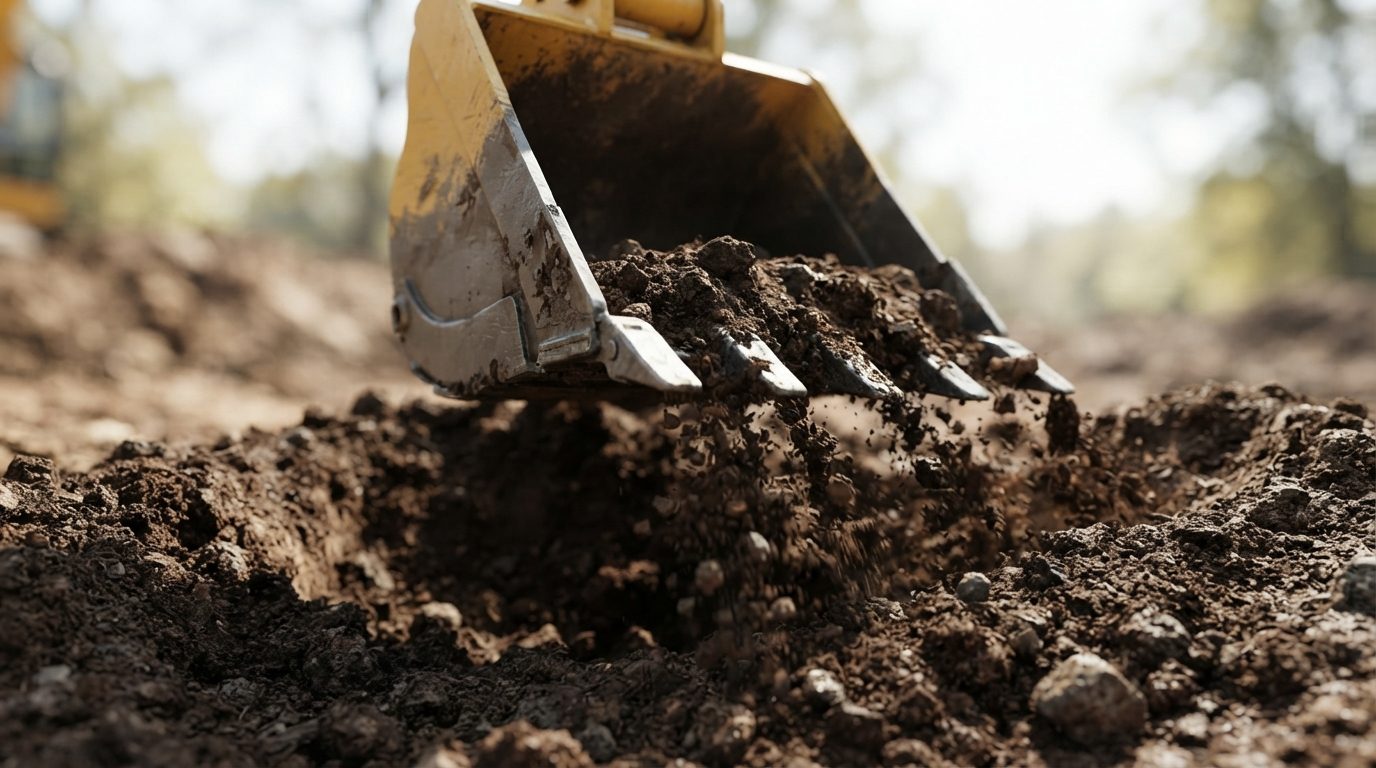
What's included
- Forestry mulchingBrush, saplings, and trees up to roughly 8 inches ground in place. Best for fields, fence lines, overgrown acreage, and trail cutting.
- Building site clearingFull removal of trees, stumps, and roots so the pad can be excavated and compacted properly.
- Stump removal and grindingStumps pulled and hauled, or ground below grade so you can seed over them.
- View clearingSelective cutting on lake lots to open the view while keeping the slope stable and the neighbors happy.
- Brush and debris removalChipping, hauling, or on-site burial where permitted.
- Fence line and property line clearingReclaiming boundaries that have grown in, often before a survey or new fence.
Clearing in lake country: slopes, watershed rules, and what grows back
On the steep lake lots — Middlesex, Vine Valley, the South Bristol shore — clearing is as much about what you leave as what you cut. Stripping a 30% slope to bare dirt sends it into the lake with the first big storm, and the towns and the Canandaigua Lake Watershed Council have rules about that. Forestry mulching shines here because the chip layer holds the soil while new growth comes in.
If you're clearing for a view, be honest with yourself about the regrowth. Sumac, box elder, and honeysuckle come back from the roots within two seasons. Mulching them off is the first step; keeping the view usually means a second pass or converting the slope to something you can mow or manage.
Ash trees are a special case. The emerald ash borer has killed most of the ash in Ontario County, and dead ash is brittle and dangerous to fell. If your lot has a lot of standing dead ash, tell us — it changes the equipment and the approach.
What moves the price
- Acreage and density. An acre of light brush and an acre of 10-inch hardwood are different jobs.
- Mulching versus full removal. Mulching is faster and cheaper; site clearing leaves a cleaner result.
- Stump handling — grind, pull and haul, or bury on site.
- Slope and access, especially on lakefront parcels.
- Whether the town requires erosion control or a permit for the area being disturbed.
Land Clearing & Forestry Mulching: questions we get
How much does land clearing cost per acre in New York?
Forestry mulching of light-to-medium brush is commonly priced per acre or per day and is the most economical option. Full clearing with stump removal for a building site costs more because of the hauling and grubbing. Our land clearing cost guide gives ranges for both.
Do I need a permit to clear land in Ontario County?
Clearing brush on your own land generally doesn't require a permit. Clearing near the lake, on steep slopes, in a wetland buffer, or as part of a building project can. Timber harvests have their own rules. We'll flag anything that applies before we start.
What's the difference between forestry mulching and regular land clearing?
Mulching grinds vegetation in place and leaves a chip layer — fast, low-impact, no debris to deal with. Traditional clearing removes trees, stumps, and roots entirely, which you need if you're building on the spot. Many jobs use both: mulch the acreage, fully clear the house site.
Can you clear a lake view without destabilizing the slope?
Yes, with selective cutting, mulching in place, and leaving root systems intact. We've done view work on Canandaigua, Keuka, and Honeoye lots. Clear-cutting a steep bank to the water is a bad idea and usually against town code.
What time of year is best for clearing?
Late fall through early spring, when the ground is firm or frozen, leaves are down, and you're not disturbing nesting birds. Mulching works most of the year; stump pulling is easier in dry conditions.
Land clearing across the Finger Lakes
We do land clearing & forestry mulching in every town below. Pick yours for the local details.
Ontario County
- Canandaigua
- Victor
- Farmington
- Bristol & South Bristol
- Naples
- Gorham
- Hopewell
- Manchester & Shortsville
- Clifton Springs
- Phelps
- Honeoye & Richmond
- East Bloomfield
- West Bloomfield
Finger Lakes
- Geneva
- Penn Yan & Keuka Lake
- Middlesex & Vine Valley
- Rushville & Potter
- Seneca Falls & Waterloo
- Lima & Livonia
Rochester Area
Syracuse Area
Get a quote
Call, or send the form and we'll get back to you — usually the same business day. Tell us the town and what you're trying to do; a photo or two never hurts.
(585) 575-0567Serving Canandaigua, Ontario County, the Finger Lakes, and the Rochester area. Larger Syracuse-area projects by arrangement.